
Recognizing Tension in Babies
Babies can carry tension patterns that affect how they feed, sleep, turn their head, and move. Here are the signs to watch for and why an early screening matters.
Signs your baby may be holding tension
Does your baby present with any of these signs and symptoms? If so, there could be some underlying tension that may be at the root of their colicky behavior. Look for: red creases in the neck; difficulty latching, sucking, or feeding, including trouble sucking or holding a pacifier and pulling away from the breast or bottle; a rotation preference; flatness on the back of the head; arching; fisted hands or curling of the toes; flexed arms; excessive lifting up of the head; wanting to stand all the time; rolling over younger than 3 months old; and oral ties.
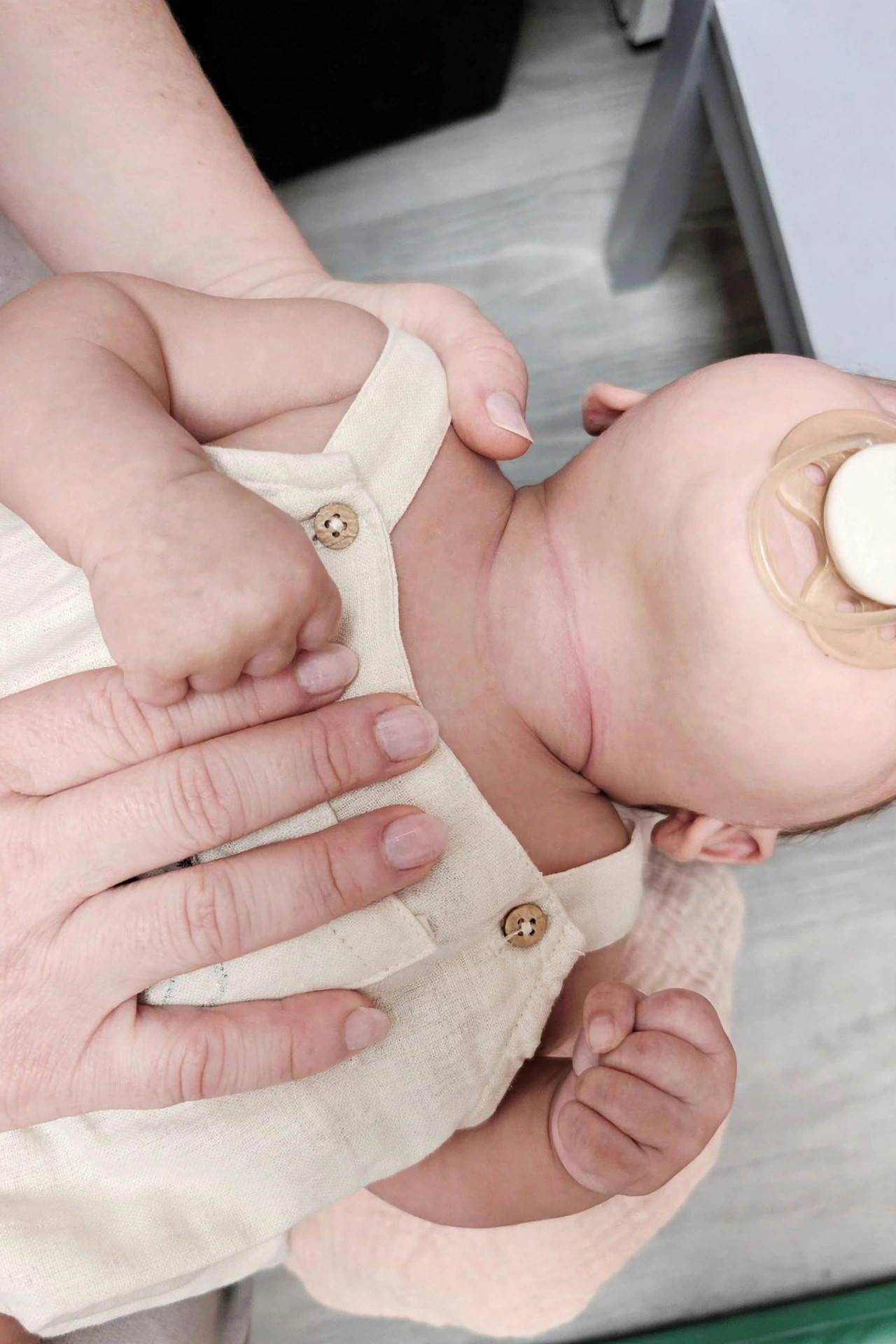
Infant Tension · quick guide
Signs your baby may be holding tension
Babies can also show tension through behavior: colicky, gassy patterns and trouble sleeping. Even the littlest ones can show us when they're stressed. If you counted more than one of these symptoms, I recommend seeking a PT evaluation to get to the root cause.
What an early screening can do
Let's normalize infant screenings for tension. Not because something is 'wrong.' Not because every baby needs treatment. But because babies can experience tension patterns that may impact how they feed, sleep, turn their head, tolerate tummy time, or move their bodies. A gentle screening can help identify asymmetries, preferences, or areas of tension early, while also giving parents peace of mind and simple ways to support their baby's development.
Infant Tension · quick guide
What an early screening can do
An early evaluation with an infant PT or OT, in collaboration with the right team, can make all the difference in relieving tension. At an evaluation, tools such as stretching, gentle movements, bodywork, modifications to tummy time, and appropriate referrals can be demonstrated. Early support doesn't mean overreacting. It means being proactive.